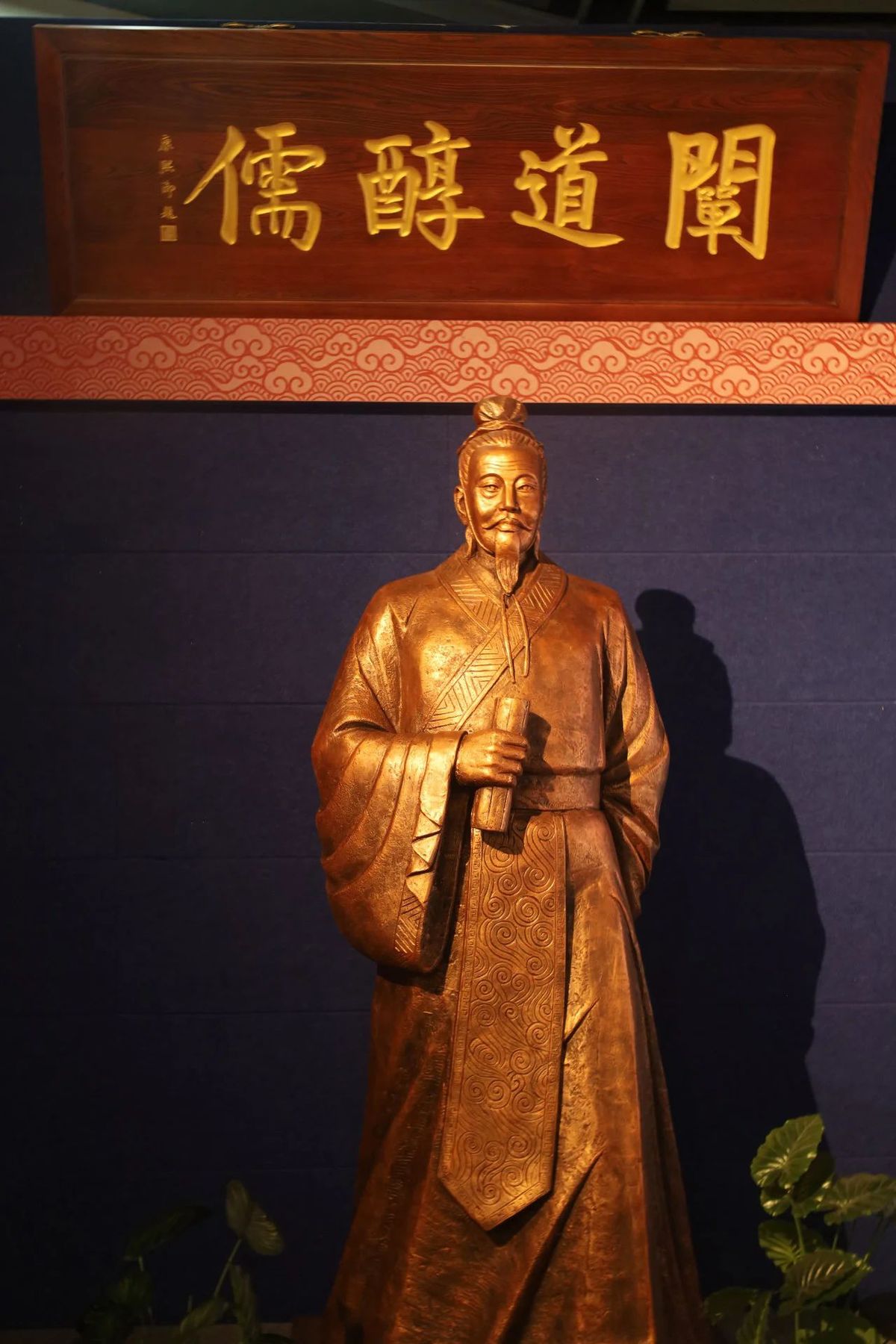
Dong Zhongshu
Introduction
Dong Zhongshu (179-104 BC) was a prominent Confucian scholar and statesman during the Western Han Dynasty (206 BC-AD 24) in China. He is highly regarded for his significant role in establishing Confucianism as the state ideology, which influenced Chinese society and governance for centuries.
Early Life and Career
Dong Zhongshu was born in modern Hengshui, Hebei province in 179 BC and emerged as a distinguished intellectual during the Western Han Dynasty. His philosophical insights and political acumen earned him a place in Emperor Wudi's court, where he served as a trusted adviser. Dong's academic journey was deeply rooted in Confucian teachings, which he passionately advocated throughout his life.
Contributions to Confucianism
Dong Zhongshu's notable contributions to Confucianism include his advocacy for the integration of Confucian principles into the political framework of the Han Dynasty. He championed the idea of using Confucianism to harmonize the cosmos with human society, a concept he extensively outlined in his work, "Chunqiu Fanlu" (Luxuriant Dew of the Spring and Autumn Annals). This text contains interpretations of Confucian classics and integrates cosmological elements, which were pivotal in aligning Confucianism with the political and social structures of his time.
Dong was a pivotal figure in the evolution and solidification of Confucianism as the dominant ideological framework of Chinese imperial governance. One of his most significant contributions was his integration of Confucian thought with other philosophical doctrines, most notably the Yin-Yang and Five Elements theories. This synthesis allowed Confucianism to offer a more comprehensive worldview, making it more appealing to the ruling class seeking an all-encompassing state ideology.
Dong's philosophical merger was articulated in his work, the Chunqiu Fanlu (Luxuriant Dew of the Spring and Autumn Annals), where he emphasized the cosmic order and moral regulations, advocating that the emperor's rule should reflect the natural order. He proposed a hierarchical social structure grounded in Confucian virtues, which resonated well with the existing imperial structure, thereby cementing the role of Confucianism in governance.
Furthermore, Dong Zhongshu's advocacy for the importance of moral integrity and benevolence in rulers and his emphasis on the education and cultivation of virtue among officials were central to Confucian ethics. By promoting the idea that the emperor should act as a moral exemplar, Dong reinforced the Confucian ideal of virtuous governance, which became a cornerstone of Chinese political thought.
Dong also played a crucial role in advocating for Confucianism to be the sole state ideology. His influence was instrumental in Emperor Wudi’s decision to establish Confucianism as the official state doctrine, thus paving the way for the Confucian educational and bureaucratic systems that would dominate Chinese society for centuries. His intellectual contributions thus laid the groundwork for Confucianism's enduring legacy in shaping the political, social, and cultural fabric of China.
Establishment of Confucianism as State Ideology
Dong Zhongshu's influence reached its zenith when he successfully persuaded Emperor Wudi to adopt Confucianism as the official state ideology. This transformation marked a turning point in Chinese history, as it laid the groundwork for Confucian principles to become the foundation of Chinese governance and social ethics. Dong's advocacy for Confucianism involved the promotion of moral virtues, hierarchical social relationships, and the importance of ritual in maintaining social order.
Legacy
Dong Zhongshu's legacy extends beyond his lifetime, as his efforts in institutionalizing Confucianism had long-standing impacts on Chinese culture, education, and political thought. His work provided a philosophical underpinning for the bureaucratic governance system of subsequent Chinese dynasties. Confucianism, as shaped by Dong's interpretations, became a guiding force in shaping ethical conduct, family structures, and societal norms.








